
Antoine Chan-Lock, PhD
3D Simulation Scientist - Physics-Based Engines
antoine.chanlock[at]gmail.com
Bio
I am a 3D simulation scientist and computer scientist at Inria, working with the EPIONE team in the Greater Nice Metropolitan Area. I develop physics-based simulation engines for soft deformations, fluids, and biomedical applications.
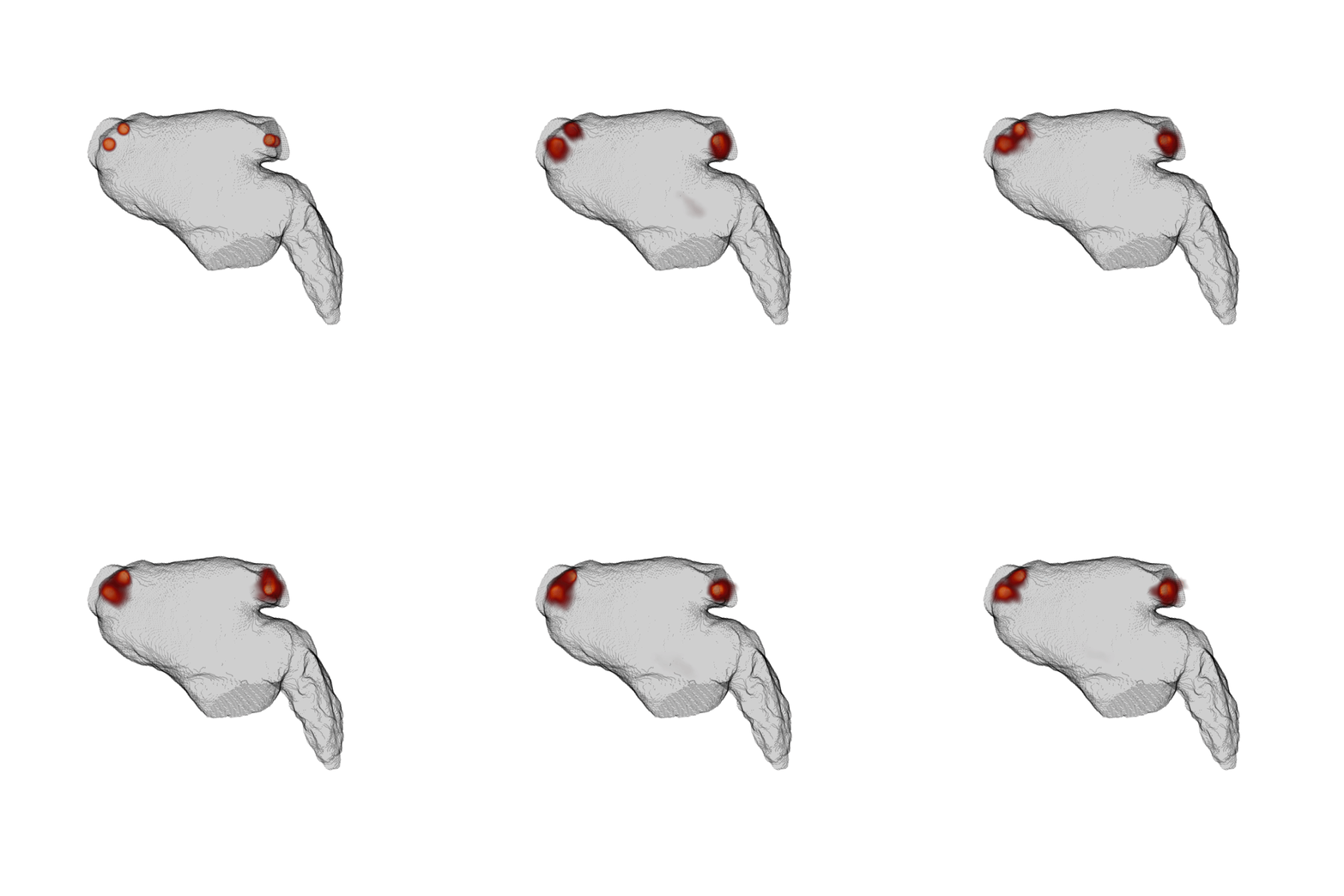
My current work focuses on computational cardiology: I am developing a fluid simulation engine based on the Lattice Boltzmann Method (LBM), the Immersed Boundary Method (IBM), and JAX to study blood flows in the heart. Fast and accurate simulations allow us to understand problematic bloodflows and open new ways to fight ischemic strokes.
During my PhD at the Universidad Rey Juan Carlos, I developed efficient homogenization and model-reduction methods for the simulation of complex and microstructured materials.
I combine numerical methods, machine-learning-assisted pipelines, and high-performance computing to improve simulation speed and accuracy.
You can find here my one-page resume, and my linkedin-resume.
Research interests: Computational cardiology, fluid simulation, soft deformations, finite element methods, microstructures, homogenization, model reduction, and high-performance scientific computing.
Projects
Now wroking on blood simulation in the heart with an LBMxIBM jax self implementation :)
Experience
- Research Scientist at Inria, EPIONE team • January 2026-Present
- Software Engineering Consultant at the European Space Agency through AcriST • April 2025-January 2026
- Simulation Scientist at Universidad Rey Juan Carlos • September 2019-April 2025
- Research Scientist at CLO Virtual Fashion • June-September 2023
- Web Developer • January 2017-September 2019
Education
- Universidad Rey Juan Carlos : PhD in Computer Graphics • 2019-2024
- Universitat Politecnica de Catalunya : Master in Numerical Methods for Engineering • 2018-2019
- SeaTech Engineering School : Master in Computational Mechanics • 2016-2019
- University of Toulon : BSc in Engineering Science • 2014-2016
- Saint Joseph de la Madeleine, Marseille : Baccalaureat, Mathematics specialization • 2014
Skills
- Scientific computing [Python, JAX, C++, Matlab, Eigen, Dask, HPC]
- Simulation [LBM, IBM, FEM, hyperelasticity, soft deformations, fluids]
- Numerical methods [Homogenization, coarsening, model reduction, nonlinear solvers, BFGS]
- Engineering [Git, CI/CD, Docker, automated testing, documentation]
- Languages [French native, English fluent (TOEIC 960/980), Spanish fluent (C1), Chinese elementary]
Publications
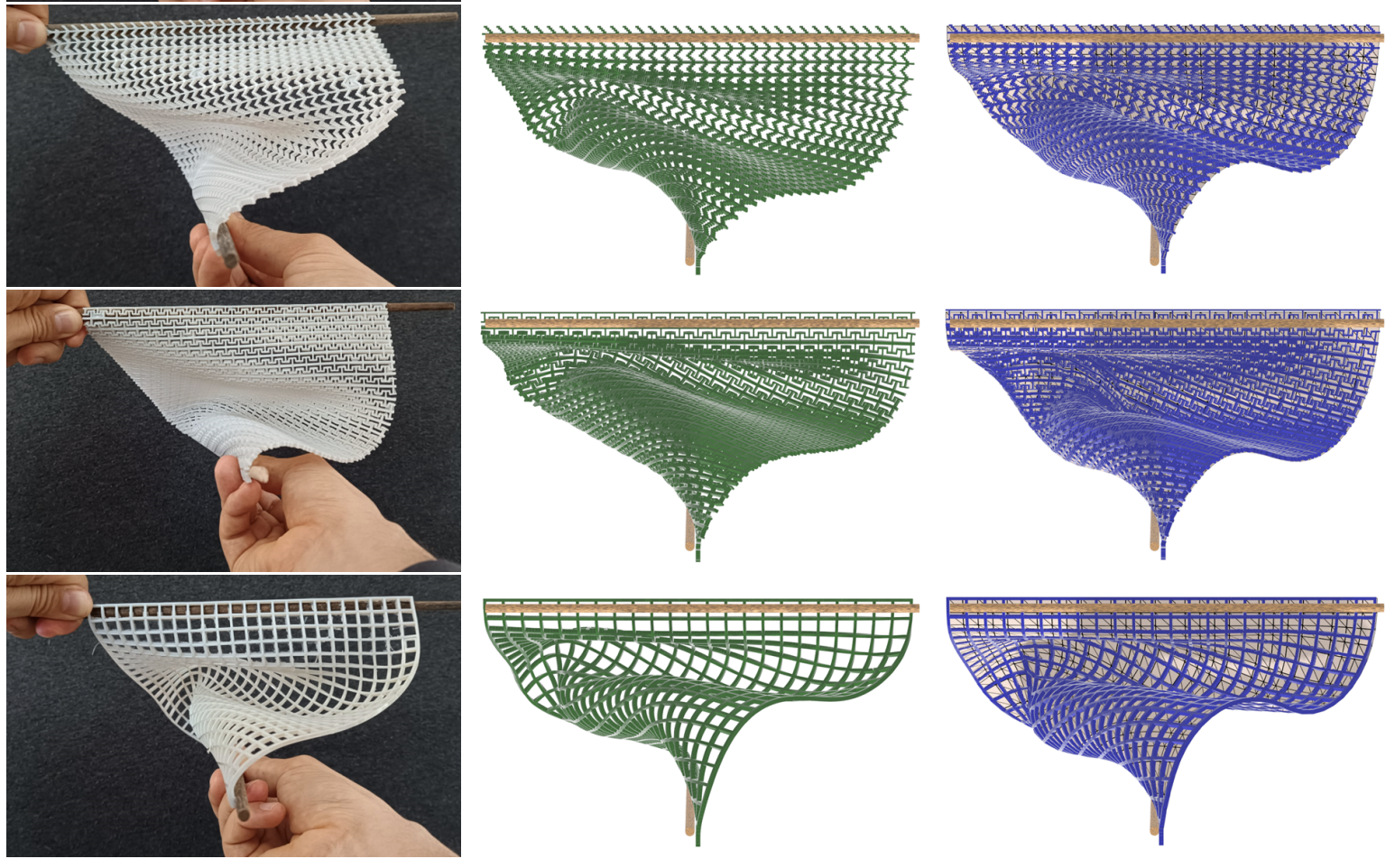
Polar Interpolants for Thin-Shell Microstructure Homogenization
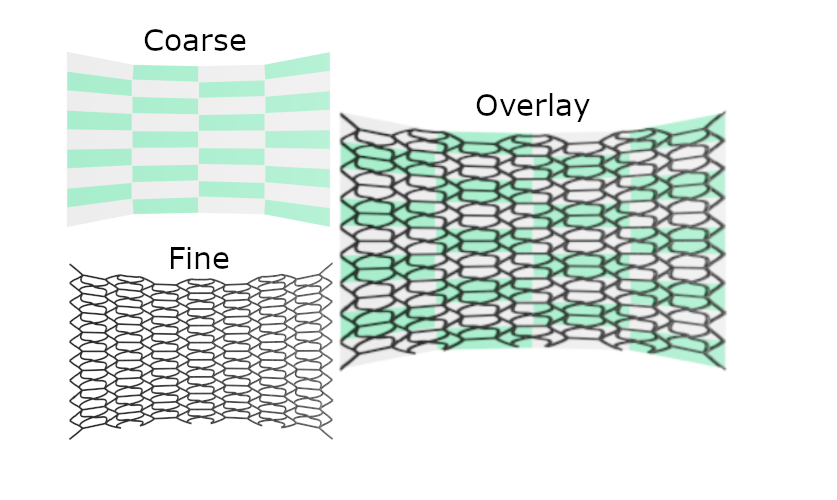
High-Order Elasticity Interpolants for Microstructure Simulation
Cite Polar Interpolants for Thin-Shell Microstructure Homogenization
@article{article,
 author = {Chan-Lock, Antoine  and Otaduy, Miguel A.},
 year = {2024},
 title = {Polar Interpolants for Thin-Shell Microstructure Homogenization},
 journal = {SIGGRAPH Asia Conference Papers (SA Conference Papers ’24)},
}Cite High-Order Elasticity Interpolants for Microstructure Simulation
@article{article,
 author = {Chan-Lock, Antoine and Perez, Jesus and Otaduy, Miguel A.},
 year = {2022},
 title = {High-Order Elasticity Interpolants for Microstructure Simulation},
 volume = {41},
 number = {8}, journal = {Computer Graphics Forum (Proc. SCA)},
 }